PetDNA guide
How to Identify a Cat Breed From a Picture
A picture can reveal a wealth of detail about a cat’s distinctive look. PetDNA compares the whole cat with familiar breed patterns, then turns those matches into a personalised tour of traits, origins, temperament, adaptations, and feline history.
Updated
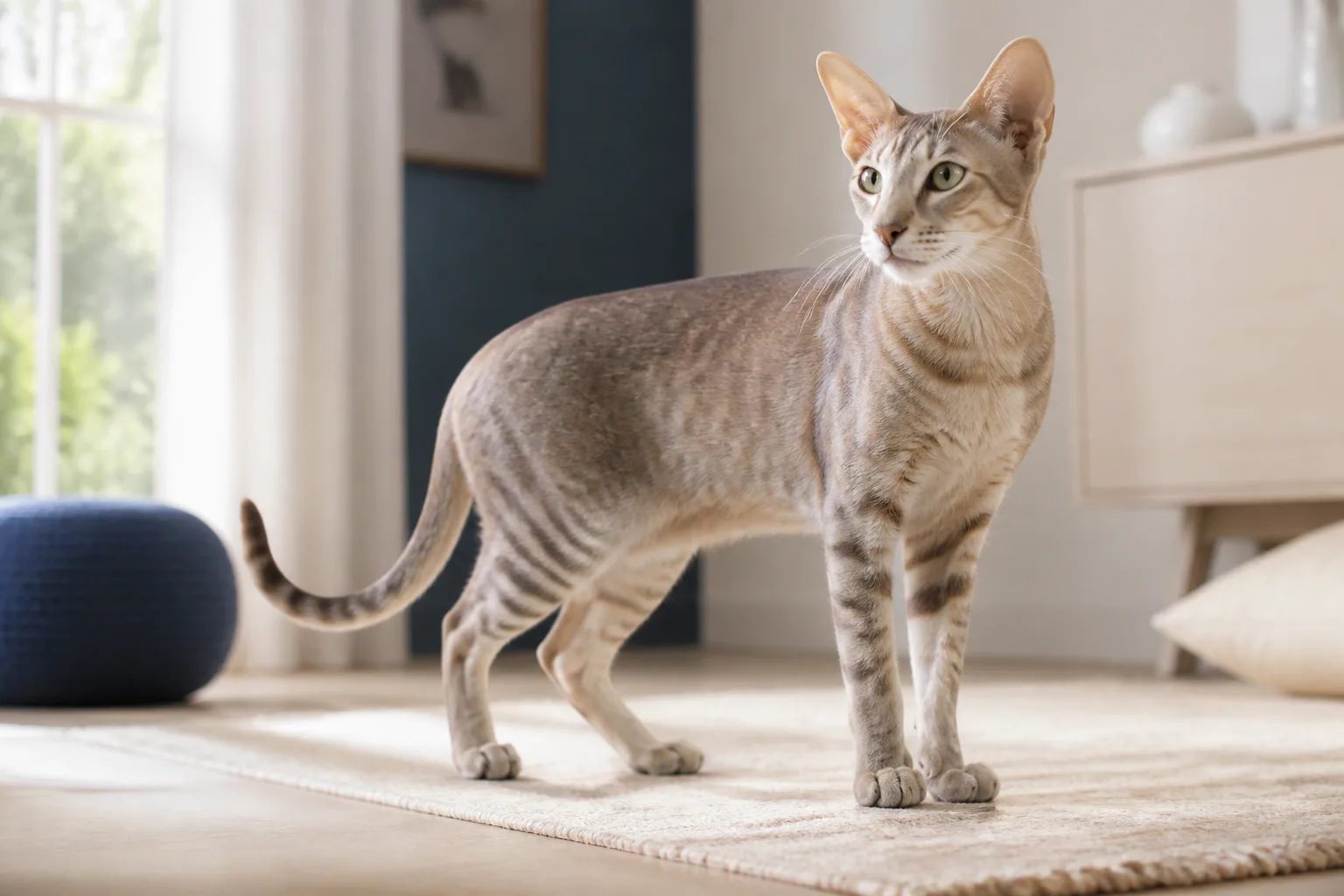
How to compare cat breed traits from a picture
- 1
Photograph face and body
Use natural light and include the cat’s profile, ears, coat, legs, body shape, and tail.
- 2
Compare groups of traits
Consider build, head shape, coat length, pattern, and tail together instead of relying on colour alone.
- 3
Keep domestic mix context
Use pedigree records for confirmed breed identity and treat photo matches as visible similarities.
Start with the cat in front of you
Begin with the details that make your cat instantly recognisable: a striped forehead, dramatic ruff, long athletic frame, compact face, oversized ears, bright eyes, or an expressive tail. Coat patterns such as tabby, tuxedo, calico, tortoiseshell, and colour-point give the report plenty to explore.
PetDNA can connect those features with familiar breed families such as Siamese, Maine Coon, Persian, or Abyssinian. Domestic shorthair and longhair cats are welcome too; the experience is built to celebrate distinctive features whether or not pedigree papers exist.
Look beyond colour and pattern
Useful clues include the length and texture of the coat, body frame, leg length, head and muzzle shape, ear size and placement, eye shape, tail length, ruff, and toe tufts. Capturing several of them together gives the report more material for a detailed match explanation.
Take a full-body picture while the cat is standing naturally. A second profile can help with the muzzle and forehead line. Bright window light shows coat texture without flattening it with flash. Keep the paws and tail visible, and avoid a wide-angle lens held too close to the face.
Try a visual pet breed analysis
Upload one clear photo for a free preview, then explore likely matches, distinctive traits, origins, temperament, adaptations, and history in the complete report.
Analyse a pet photoWhat a PetDNA cat report adds
PetDNA compares the visible features in your picture and suggests likely breeds, breed families, or animal types. The report then expands into physical traits, possible historical origins, movement, temperament tendencies, environmental adaptations, and cultural connections. These sections give you useful avenues to explore beyond a single breed name.
The ranked matches are the first chapter. Follow them into sections about physical features, historical origins, movement, temperament tendencies, environmental adaptations, and cultural connections. You can save the finished report and share the most surprising discoveries.
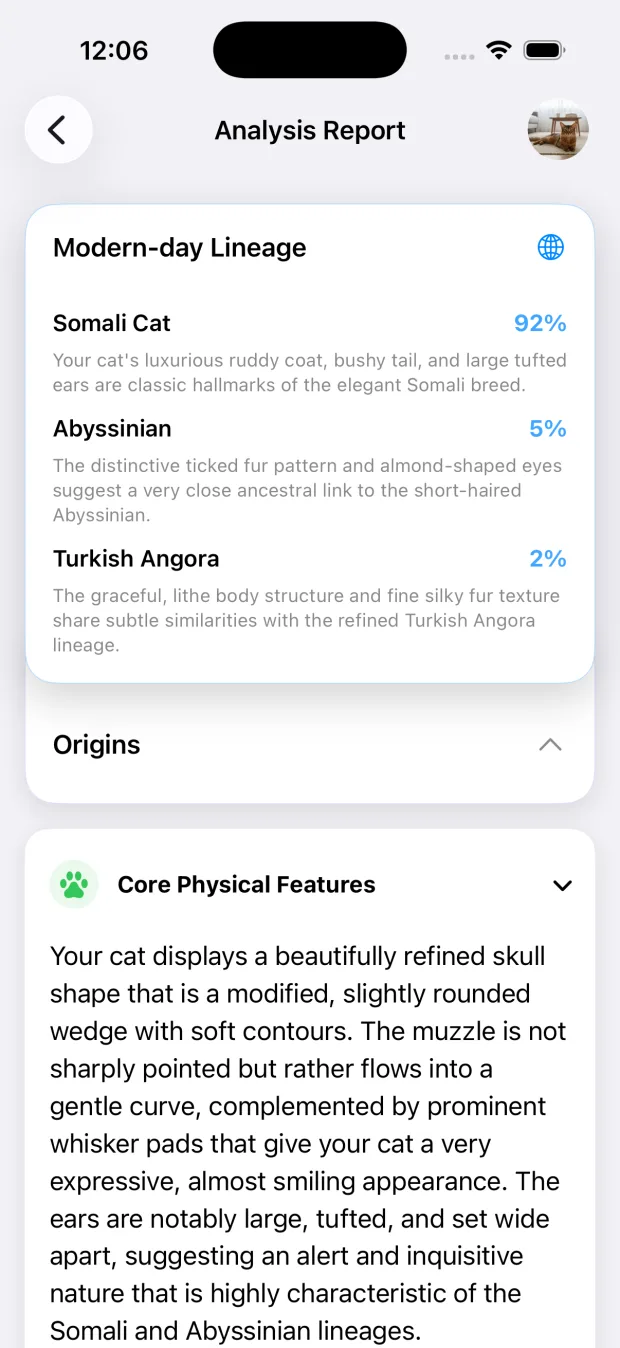
Follow the most interesting connections
Use the report as a guided tour. Compare the suggested regions with the history of each breed family, look for connections between coat and climate, and see how body structure relates to movement. The artistic and symbolic sections add stories from cultures that have lived alongside similar cats.
Pedigree records or laboratory services answer different ancestry questions. PetDNA focuses on an immediate, visual experience that helps you notice more, learn more, and enjoy the character of the cat already sharing your home.
Frequently asked questions
Is tabby a cat breed?
No. Tabby is a coat pattern that appears in domestic cats and numerous recognized breeds.
Can eye colour identify a cat breed?
Eye colour can support a comparison, but it is too widely shared to identify a breed by itself.
Related PetDNA guides
How Accurate Are Pet Breed Scanner Apps?
Learn what improves pet breed scanner results, how to read each match, and how PetDNA turns a clear photo into a richer pet story.
Photo Breed Identifier vs DNA Test
Compare a fast, story-rich PetDNA photo report with laboratory DNA testing and choose the experience that fits what you want to discover.