PetDNA guide
How Accurate Are Pet Breed Scanner Apps?
The most useful pet breed scanner results begin with a clear photo and continue with an explanation you can understand. PetDNA shows likely matches, highlights the visible clues behind them, and expands the result into traits, origins, temperament, adaptations, and history.
Updated
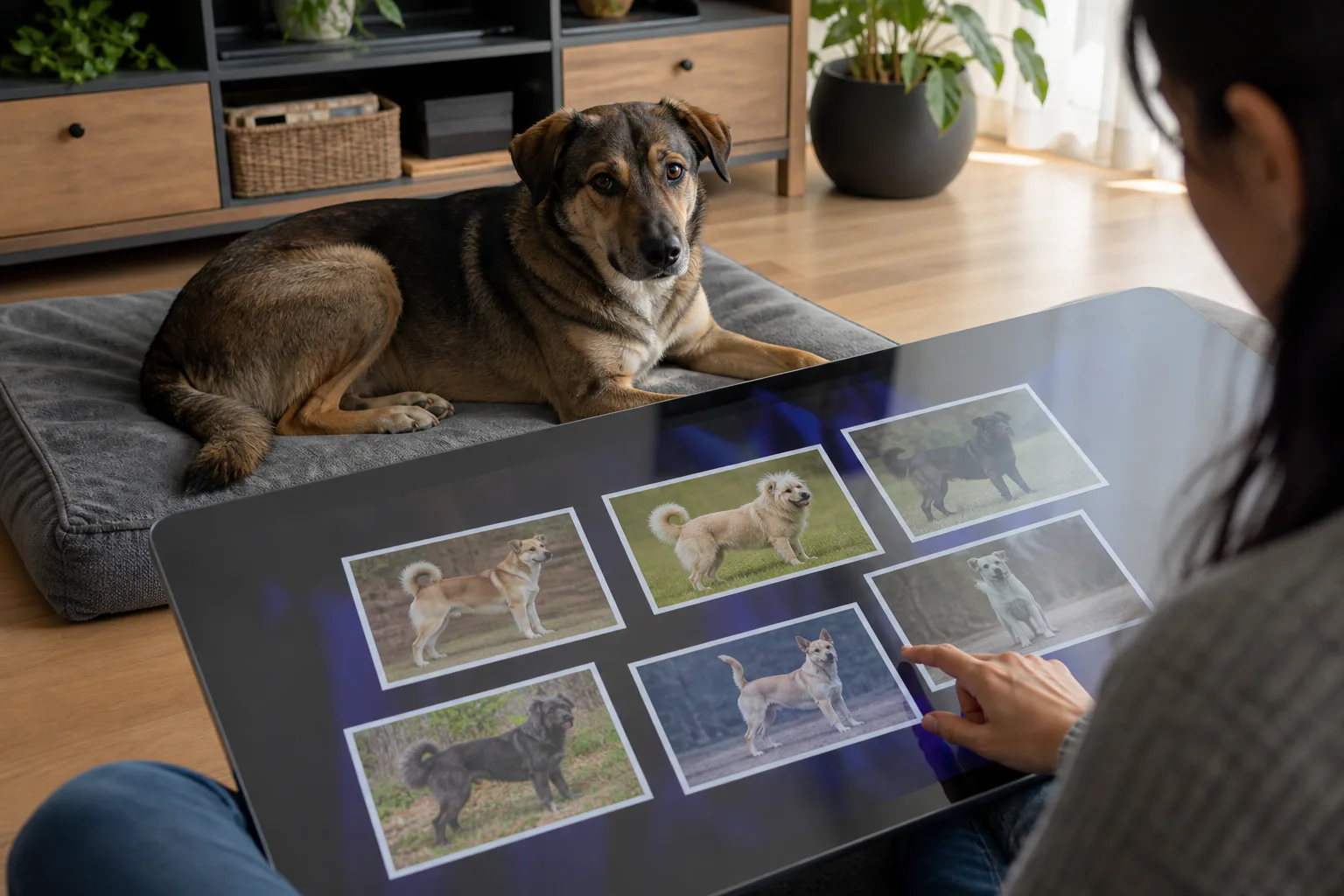
Accuracy depends first on the image
A sharp standing photo contains more usable information than a dark face portrait or a picture taken through motion blur. The tool needs to see the features it compares: head and muzzle shape, ears, coat, markings, body proportions, legs, and tail. Heavy filters and wide-angle distortion can change those cues.
Age matters too. Puppies and kittens have different proportions and coats from adults. Seasonal grooming, a recently shaved coat, weight changes, and an unusual posture may all move the visible result toward another breed group.
Distinctive combinations create stronger matches
A distinctive combination of features often produces a focused shortlist. A long muzzle, particular ear set, compact frame, unusual coat texture, and characteristic tail together tell a much stronger visual story than colour alone.
Mixed-breed dogs and domestic cats can make the discovery especially interesting because their features may connect with several families. The explanations help you see what each suggestion contributes to the overall picture.
Try a visual pet breed analysis
Upload one clear photo for a free preview, then explore likely matches, distinctive traits, origins, temperament, adaptations, and history in the complete report.
Analyse a pet photoUse the explanations to understand the ranking
A ranked match answers a useful visual question: which known patterns look most similar to this picture? The percentage makes the shortlist easy to scan, while the surrounding notes show how the app reached each suggestion.
The explanation beside a match is where the report comes alive. Look for several supporting traits, then follow the match into origins, working history, movement, temperament themes, and adaptations. Those connections add meaning well beyond the number.
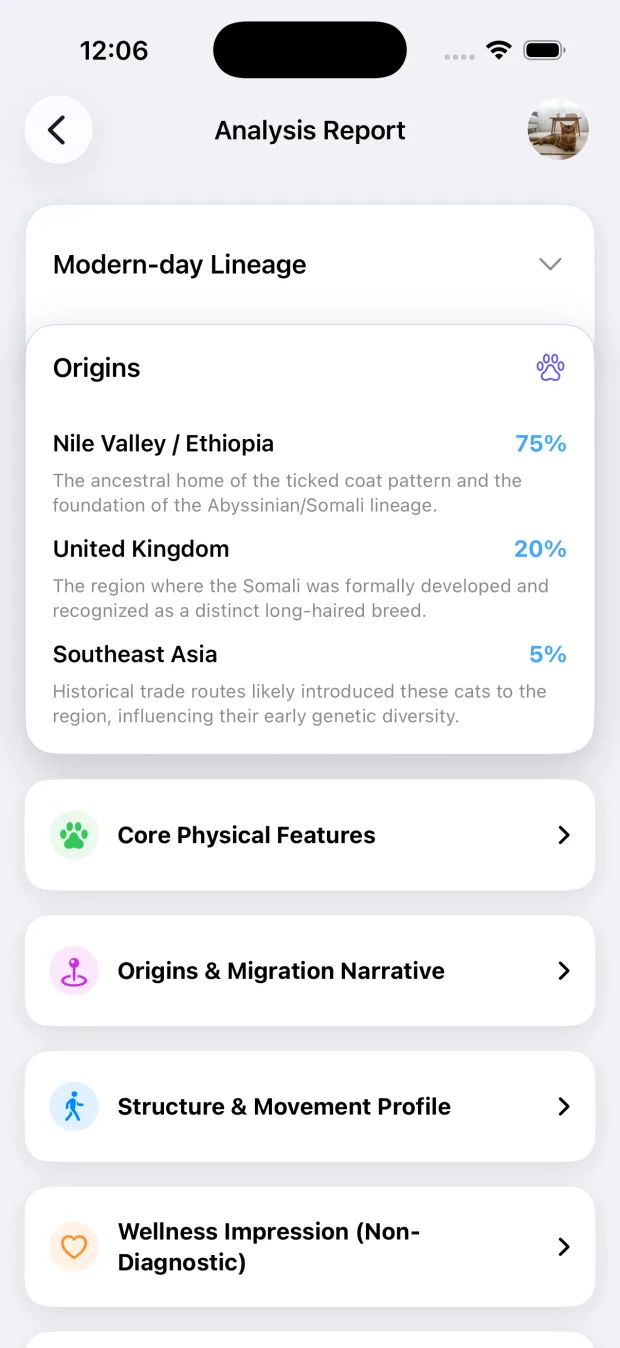
Get more value from the complete report
You can compare two clear angles of the same pet and see which visible themes repeat. Pair the results with known history and the personality you observe every day to create a fuller portrait of your companion.
Save the report, share it, and revisit the sections that surprise you. PetDNA is designed for visual discovery and education; genetic, legal, breeding, and medical questions call for the relevant specialist service.
Frequently asked questions
Why do two photos give different breed matches?
Each angle exposes different features, and lighting or lens distortion can change how those features appear.
What do breed scanner percentages show?
They rank how strongly the submitted photo visually matches each suggestion, making it easy to compare the leading results and their supporting features.
Related PetDNA guides
The Best Photo for Pet Breed Identification
Follow a practical photo checklist that helps PetDNA see more distinctive details and create a richer, more personal pet report.
Photo Breed Identifier vs DNA Test
Compare a fast, story-rich PetDNA photo report with laboratory DNA testing and choose the experience that fits what you want to discover.